|
|
 A peaceful suburban park, with lots of specimen trees of all kinds, many evergreen. This was taken on a mid-winter day.
  Bronze sculpture of a World War 1 "digger" (the term applied to Australian and New Zealand soldiers) on the Anzac Bridge. Sculptor Alan Somerville. Bronze sculpture of a World War 1 "digger" (the term applied to Australian and New Zealand soldiers) on the Anzac Bridge. Sculptor Alan Somerville.Today is Anzac Day in Australia and New Zealand. It commemorates the contribution made in war. The date, 25 April, is the day when troops landed at Gallipoli (Gelibolu) in Turkey in the disastrous Dardanelles campaign of World War One. I prefer to think of it as a day not glorifying war but acknowledging its futility. The allies landed on the peninsula, the Australians and New Zealanders at a little bay which is now known as Anzac Cove, at dawn on 25 April, 1915. [ANZAC means Australian and New Zealand Army Corps] The first marking of ANZAC Day commemoration was in 1916. By the 1920s it was a public holiday throughout Australia, as it remains today. The things I think about on Anzac Day include: that peace is precious and always worth striving for;that great friendships can be forged once people lay down arms and realise we are all human - Australians have great bonds with former foes in Turkey, and former allies in France. The Turks engaged in one of the most generous acts of reconciliation, when Ataturk in 1934 urged the mothers of the slain not to weep, as "your sons are now also our sons." a chance to study the history and realise that while Australians went into WW1 as colonials - part of the British Empire - and many still at that time regarded England as "home" - fighting for "God, King and Country" , somethign else was forged on those battelfields, an Australian identity that hadn't yet become real. Australia had only been a unified country, rather than separate colonies for 13 years at the time of the outbreak of WW1. Three years ago I attended Anzac Day commemorations in France, at Villers-Bretonneux, and Bullecourt, two scenes huge Australian involvement on the Western Front. There was far more loss of life in France than Gallipoli, as horrific as the latter was. Here are some of the pictures I took then.
Anyone interested in exploring more about Gallipoli and France/Belgium from the Australian point of view, I thoroughly recommend these books: Gallipoli by Les Carlyon, and The Great War, also by Les Carlyon.
The movie, Gallipoli, starring Mel Gibson and Mark Lee, made in 1981, holds up remarkably well. It is shown nightly at the Anzac Pansiyon in Canakkale in Turkey!
But for documentary film, you just can't go past this Turkish production, also called Gallipoli, from 2005. It is a magnificent film, telling the story of the war from both sides, and depicting the crazyness of it all, as well as the humanity on both sides, mainly throught the personal accounts of combatants on both sides. It uses the photographs, diaries and letters of three Australians, two Britons, three New Zealanders and two Turkish soldiers from the beginning of the campaign to its end. Review here. Do try to see it if you are at all interested in this part of our history. I'm watching it tonight on SBS TV.
More tomorrow, on a more personal note.
 Continuing on our walk, looking across Little Sirius Cove to Curraghbeena Point. Look carefully at the right hand side and you can see the apartment block the spider was "attacking" two days ago. Aerial map: http://www.mosman.nsw.gov.au/file_download/712/CurlewCampArtistsWalk.pdf
 The city, with Robertson's Point (Cremorne Point) and its lighthouse, from Curlew Camp on Little Sirius Cove, Mosman. The city, with Robertson's Point (Cremorne Point) and its lighthouse, from Curlew Camp on Little Sirius Cove, Mosman.
Let's take a walk on a beautiful sunny day, from Taronga Zoo Wharf to Cremorne Point, around Little Sirius Cove and Mosman Bay. You can see a fantastic aerial shot of the route of the walk here: www.mosman.nsw.gov.au/file_download/712/CurlewCampArtistsWalk.pdfIn the 1890s, Curlew Camp was the haunt of artists Arthur Streeton, Tom Roberts and friends. Heavily influenced by French Impressionism, they set up their easels in the bushland and stayed in a fairly elaborate camp here on the shore of Little Sirius Cove.  Above: Arthur Streeton - Rain Over Sydney Harbour 1893  Above: Arthur Streeton - Sirius Cove about 1895
  A spider in the bush looks like it's hanging over this apartment block!
 The equestrian sculpture, above is The Offerings of Peace, by Gilbery Bayes. Cast in London in 1923, and put in place in 1926. The inscription beneath reads 'The real and lasting victories / are those of peace and not of war.' Peace offers the Arts and Plenty. These are represented by Greek comic and tragic masks, a lyre and some fruits.  "The façade and old wing of the Gallery were built between 1896 and 1909. Architecturally, Sydney's Art Gallery reflects nineteenth century ideas about the cultural role of a gallery as a temple to art and civilizing values." http://www.artgallery.nsw.gov.au/aboutus/history/building "The façade and old wing of the Gallery were built between 1896 and 1909. Architecturally, Sydney's Art Gallery reflects nineteenth century ideas about the cultural role of a gallery as a temple to art and civilizing values." http://www.artgallery.nsw.gov.au/aboutus/history/building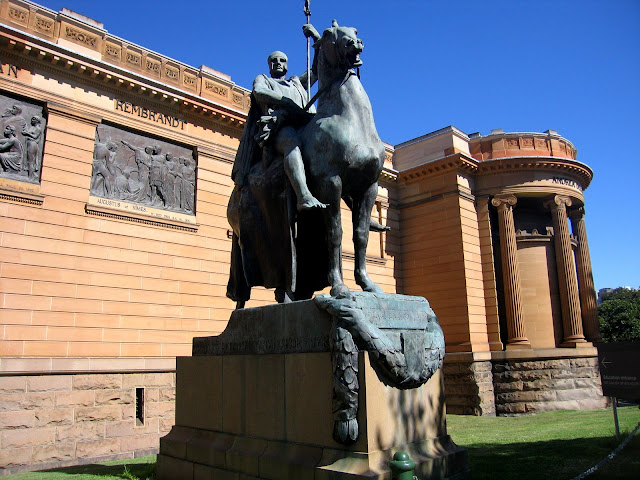 The inscription beneath The Offerings of War reads 'That our house may stand forever / and that justice and mercy grow.' War holds a staff topped by a figure of Winged Victory. He also holds a bundle of swords and broken spear shafts. To find out about the bronze reliefs in the facade, and why there are only 4 of them, click here.
 Wollongong Rd, Arncliffe. You can see some more grandiose examples of local Victorian architecture if you click here.
 WOW, bridges....where do you start in Sydney, a city with stacks of bridges. I've posted lots before, Tom Ugly's and Captain Cook over The Georges River; the soaring Anzac Bridge; Gladesville over the Parramatta River; Sydney oldest bridge the convict built one at Lansvale; and even have a page on Sydney Daily Photo Extra dedicated exclusively to the Sydney Harbour Bridge. I've done railway bridges and footbridges, and even the little bridge we call 'Pooh" Sticks Bridge' at my home away from Sydney. (If you don't know what Pooh sticks are and what it has to do with bridges, well, AA Milne can help...or Wikipedia.) WOW, bridges....where do you start in Sydney, a city with stacks of bridges. I've posted lots before, Tom Ugly's and Captain Cook over The Georges River; the soaring Anzac Bridge; Gladesville over the Parramatta River; Sydney oldest bridge the convict built one at Lansvale; and even have a page on Sydney Daily Photo Extra dedicated exclusively to the Sydney Harbour Bridge. I've done railway bridges and footbridges, and even the little bridge we call 'Pooh" Sticks Bridge' at my home away from Sydney. (If you don't know what Pooh sticks are and what it has to do with bridges, well, AA Milne can help...or Wikipedia.)
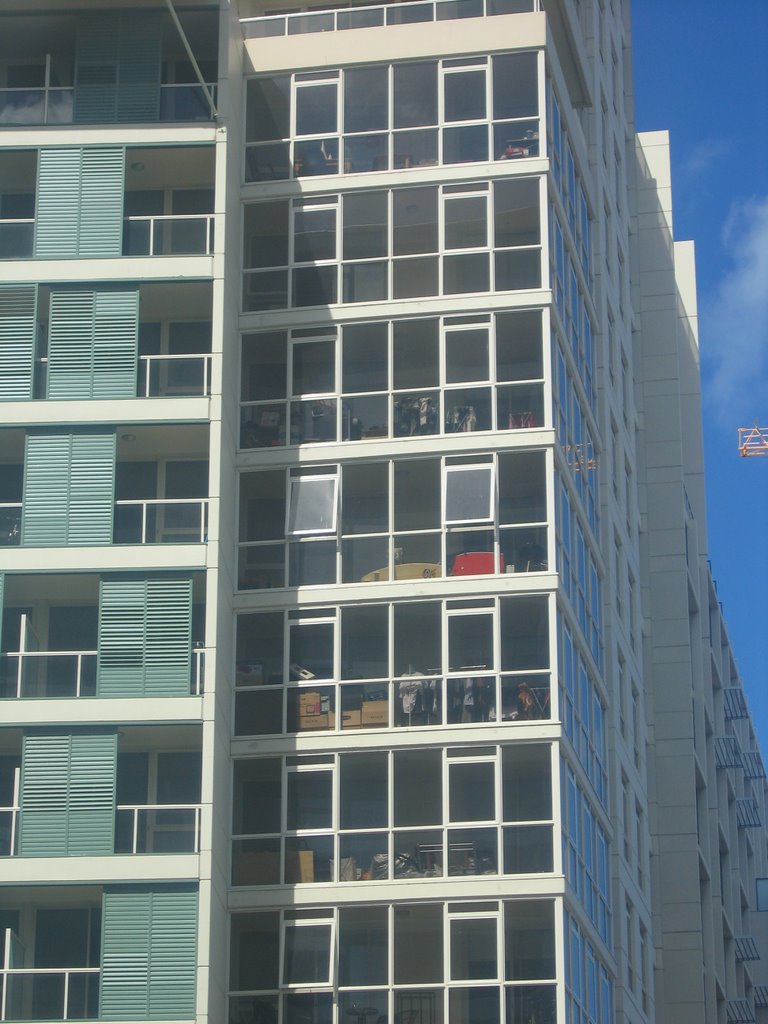
So, I agonised over what to go and photograph, as I like to go out and do something specific for each theme day. Then I got sick (see yesterday's blog), and had to dive into the reserve stack for inspiration....and I guess it's back to the bridge with a zillion images, and I thought - here it is without any water, just like any old suburban bridge really.... (though rents round this gentrified part of inner Sydney can be $2000+ a week!)
Here's links to bridge pics in 128 different places:
Boston (MA), USA - San Diego (CA), USA - Stayton (OR), USA - New York City (NY), USA - Portland (OR), USA - Montego Bay, Jamaica - Inverness (IL), USA - Singapore, Singapore - Stockholm, Sweden - Setúbal, Portugal - Brussels, Belgium - Phoenix (AZ), USA - Seattle (WA), USA - Hyde, UK - Manila, Philippines - Fort Lauderdale (FL), USA - London, England - Austin (TX), USA - Toulouse, France - Weston (FL), USA - Sesimbra, Portugal - Selma (AL), USA - Silver Spring (MD), USA - Saarbrücken, Germany - Cleveland (OH), USA - Crystal Lake (IL), USA - American Fork (UT), USA - Seoul, South Korea - Kyoto, Japan - Tokyo, Japan - Norwich (Norfolk), UK - North Bay (ON), Canada - Arradon, France - Paderborn, Germany - Durban, South Africa - Philadelphia (PA), USA - Cypress (TX), USA - Cottage Grove (MN), USA - Prague, Czech Republic - Portland (OR), USA - Greenville (SC), USA - Boston (MA), USA - Port Angeles (WA), USA - Kuala Lumpur, Malaysia - Wichita (Ks), USA - Saint Paul (MN), USA - Petaling Jaya (Selangor), Malaysia - Grenoble, France - New York City (NY), USA - Nottingham, UK - Hobart (Tasmania), Australia - Arlington (VA), USA - Minneapolis (MN), USA - Miami (FL), USA - Cheltenham, UK - Albuquerque (NM), USA - Saratoga Spgs. (NY), USA - Las Vegas (NV), USA - Tuzla, Bosnia and Herzegovina - Nashville (TN), USA - Toruń, Poland - New Orleans (LA), USA - Port Elizabeth, South Africa - Melbourne, Australia - Moscow, Russia - Trujillo, Peru - Château-Gontier, France - Quincy (MA), USA - Melbourne, Australia - Port Vila, Vanuatu - Joplin (MO), USA - Bellefonte (PA), USA - Brookville (OH), USA - Chateaubriant, France - Chandler (AZ), USA - Stavanger, Norway - Baziège, France - Auckland, New Zealand - Wellington, New Zealand - Ocean Township (NJ), USA - Subang Jaya (Selangor), Malaysia - Detroit (MI), USA - Riga, Latvia - Nelson, New Zealand - Budapest, Hungary - Cape Town, South Africa - Sydney, Australia - Dunedin (FL), USA - Sofia, Bulgaria - Radonvilliers, France - Turin, Italy - Montpellier, France - Kansas City (MO), USA - Minneapolis (MN), USA - Haninge, Sweden - Wailea (HI), USA - Lubbock (TX), USA - Rabaul, Papua New Guinea - Terrell (TX), USA - Mexico City, Mexico - Saint-Petersburg, Russian Federation - Budapest, Hungary - Montréal (QC), Canada - Sharon (CT), USA - Le Guilvinec, France - Jefferson City (MO), USA - Saigon, Vietnam - London, UK - Crepy-en-Valois, France - Orlando (FL), USA - Maple Ridge (BC), Canada - Paris, France - Mainz, Germany - Newcastle (NSW), Australia - Wassenaar (ZH), Netherlands - Menton, France - Monte Carlo, Monaco - Darmstadt, Germany - Naples (FL), USA - Torino, Italy - Saint Louis (MO), USA - Bogor, Indonesia - The Hague, Netherlands - Minneapolis (MN), USA - Anderson (SC), USA - Melbourne (VIC), Australia - West Sacramento (CA), USA - Christchurch, New Zealand
 Unveiled in 1994, the bi-centenary of European presence (22 farms) in the formerly Aboriginal Darrug land. Windsor was the third settlement in the colony of New South Wales, after Sydney Cove and Parramatta. Governor Macquarie had plans drawn up for Windsor in 1810. Unveiled in 1994, the bi-centenary of European presence (22 farms) in the formerly Aboriginal Darrug land. Windsor was the third settlement in the colony of New South Wales, after Sydney Cove and Parramatta. Governor Macquarie had plans drawn up for Windsor in 1810. 
 Taken from inside the Botanic Gardens, the "castle" like building is The Con (Sydney Conservatorium High School and University). I showed it once before, brilliantly lit with laser lights during the Christmas-New Year period. Click here. Designed by convict architect, Francis Greenway, the Con was originally the government stables of colony of New South Wales. Taken from inside the Botanic Gardens, the "castle" like building is The Con (Sydney Conservatorium High School and University). I showed it once before, brilliantly lit with laser lights during the Christmas-New Year period. Click here. Designed by convict architect, Francis Greenway, the Con was originally the government stables of colony of New South Wales.
 More boxes stacked on top of each other. Not containing apples, these harbour the species Homo sapiens which allegedly means "wise man" or "knowing man". Sometimes I really wonder about that :-) More boxes stacked on top of each other. Not containing apples, these harbour the species Homo sapiens which allegedly means "wise man" or "knowing man". Sometimes I really wonder about that :-)
 In the older inner Sydney suburb of Waterloo, amongst heavily trafficked streets, and a congestion of power lines and traffic lights, is the Cauliflower Hotel, first established in 1838. (A pub is often called a hotel in Australia - derived, I think, from hostelry. Many used to offer accommodation in the upstairs section.) 
 An area of Greater Sydney, called Arcadia, with market gardens, orchards, parks and nurseries. Aptly named.* apologies to Nicolas Poussin! An area of Greater Sydney, called Arcadia, with market gardens, orchards, parks and nurseries. Aptly named.* apologies to Nicolas Poussin!
 In the foreground Sydney University Women's Rowing Club. The blue building on the other shore is the Sydney Fish Markets. 
 In a way, a contiuation of yesterday's theme for me. See those loud speakers on the post near the street sign? They have recently appeared around central Sydney, and are touted as "public information" and "security" devices, enabling public broadcast of warnings, crowd instructions etc. in the case of terrorist attack or emergency. I can't wait for Soviet- style military marching music, or Maoist or Dear Leader propaganda lectures to begin... Taken on the corner of Druitt and George Sts outside Sydney Town Hall. By the way, it's the first day of Spring here today. All these Daily City Photo Bloggers have signed up to particpate in the theme day. http://www.twincitiesdailyphoto.com - Cleveland (OH), USA - Menton, France - Monte Carlo, Monaco - Singapore, Singapore - Boston (MA), USA - Mexico (DF), Mexico - Kajang (Selangor), Malaysia - Mainz, Germany - Evry, France - Port Angeles (WA), USA - Sequim (WA), USA - Maple Ridge (BC), Canada - Nottingham, UK - Toulouse, France - Wassenaar (ZH), Netherlands - Manila, Philippines - Mumbai, India - Montpellier, France - Bellefonte (PA), USA - Stayton (OR), USA - Moscow, Russia - Paris, France - Saint Paul (MN), USA - Austin (TX), USA - Lyon, France - Stockholm, Sweden - Hyde, UK - Hong Kong, China - Joplin (MO), USA - Seoul, South Korea - Chandler (AZ), USA - St. Louis (MO), USA - Arlington (VA), USA - Anderson (SC), USA - Kuala Lumpur, Malaysia - Villigen, Switzerland - Sydney, Australia - Ampang (Selangor), Malaysia - Montego Bay, Jamaica - Norwich (Norfolk), UK - San Diego (CA), USA - Bandung (West Java), Indonesia - Albuquerque (NM), USA - Melbourne, Australia - Nelson, New Zealand - Quincy (MA), USA - Kyoto, Japan - Tokyo, Japan - Bend (OR), USA - Wellington, New Zealand - New Orleans (LA), USA - Cypress (TX), USA - Nashville (TN), USA - Bucaramanga (Santander), Colombia - Detroit (MI), USA - Saigon, Vietnam - Selma (AL), USA - Phoenix (AZ), USA - Miami (FL), USA - Arradon, France - Sheki, Azerbaijan - New York City (NY), USA - Inverness (IL), usa - North Bay (ON), Canada - Melbourne, Australia - Port Vila, Vanuatu - Tenerife, Spain - Auckland, New Zealand - Forks (WA), USA - Rotterdam, Netherlands - Chateaubriant, France - Madison (WI), USA - Wailea (HI), USA - Orlando (FL), USA - Saint-Petersburg, Russian Federation - Ajaccio, France - Baltimore (MD), USA - Crepy-en-Valois, France - Rabaul, Papua New Guinea - Budapest, Hungary - Lyon, France - Saarbrücken, Germany - Adelaide (SA), Australia - Le Guilvinec, France - River Falls (WI), USA - Stavanger, Norway - Naples (FL), USA - London, UK - La Antigua, Guatemala - Philadelphia (PA), USA - Montréal (QC), Canada - Paris, France - San Diego (CA), USA - Trujillo, Peru - Haninge, Sweden - Prague, Czech Republic - Oslo, Norway - Grenoble, France - Shanghai, China - Toronto (ON), Canada - Durban, South Africa - Zurich, Switzerland - Cape Town, South Africa - Singapore, Singapore - Torino, Italy
 A closer view of the church in the background of yesterday's photo. St Peter’s Church is the oldest building in Campbelltown and the third oldest Anglican Church in Australia. It opened for worship on 29th June, 1823. It was designed and supervised by Frank Lawless, a foreman bricklayer. He seems to have copied the style of the great convict architect Francis Greenway. The style is Georgian (1702-1830) The pendulum clock was made by Johnsons in London in 1838 (and certainly wasn't shoing the correct time! I was there about 2.30pm)
 Campbelltown, now a suburb/district captured as part of greater Sydney, is 50 kms southwest of the city centre. The Tharawal Aboriginal people lived here for 40 000 people. In On 1 December 1820 Campbelltown was named and founded by Governor Lachlan Macquarie. His wife, Elizabeth's family name was Campbell. In the decades following World War II Campbelltown gradually change from a town, surrounded by rural land to a suburb of Sydney, with the development of new suburbs along the rail line towards Campbelltown. This sculpture in Mawson park is of Mrs Elizabeth Macquarie. It was unveiled on 5 August 2006. The sculptor is renowned artist Tom Bass.Bass’s statue depicts Elizabeth Macquarie with a sunbonnet, apron and watering can, and surrounded by a bed of irises. Bass gained inspiration for the statue from local historical reports, which said Mrs Macquarie was known to have given bunches of irises to local settlers when accompanying her husband on his official visits. I'm glad I was there today in Iris blooming season! The Anglican church in the background, St Peters, dates from 1823.
|
|


 2 ... 2 ...